
Taxes for Dummies: 2024 Guide

Navigating the 2024 tax season can feel daunting‚ but resources like the 2024 Tax Guide Edition and quick reference guides
are available.
These tools offer insights into maximizing returns‚ understanding deductions‚ and staying informed about the latest tax law changes‚
simplifying the process.
Downloadable guides and worksheets provide handy references for rates‚ deductions‚ and essential tax information for individuals and corporations.
Understanding the 2024 Tax Landscape
The 2024 tax landscape presents both familiar challenges and subtle shifts for taxpayers. Resources like the 2024 Tax Guide Edition‚ available on platforms like Amazon‚ aim to demystify the process. These guides emphasize strategies for saving money and lowering tax liabilities‚ a crucial aspect for many individuals.
A key element of understanding the current landscape is recognizing the availability of downloadable resources. A two-page desktop reference guide provides quick access to vital information‚ including corporate and individual tax rates‚ self-employment tax rates‚ and standard deduction amounts. This accessibility is particularly helpful for those seeking a streamlined approach to tax preparation.
Furthermore‚ staying informed about changes in tax law is paramount. The 2024 guides highlight these modifications‚ ensuring taxpayers are aware of any adjustments that may impact their returns. While the 2025 tax season is anticipated to have unique aspects‚ focusing on the current year’s guidelines is essential for accurate filing. Utilizing these resources empowers individuals to navigate the complexities of the tax system with greater confidence.
Key Tax Law Changes for 2024
While specific‚ detailed changes require ongoing monitoring of official IRS publications‚ preliminary information suggests a continuation of many provisions from recent years‚ with potential adjustments to inflation-related figures. The 2024 Tax Guide Edition‚ and similar resources‚ are vital for staying abreast of these updates.
Taxpayers should anticipate potential modifications to tax brackets‚ standard deductions‚ and credit amounts‚ all influenced by inflation. Quick reference guides‚ like those offered by TIAA‚ provide summaries of these key figures as of December 31‚ 2023‚ offering a baseline for understanding potential changes.
It’s crucial to remember that the 2025 tax season is expected to introduce further complexities. However‚ focusing on understanding the 2024 rules is paramount for accurate filing this year. Resources emphasize maximizing returns and utilizing available deductions‚ and staying informed through downloadable guides and official IRS communications will be essential for navigating the evolving tax landscape effectively.

Federal Income Tax Brackets 2024
Understanding federal income tax brackets is fundamental to calculating your tax liability. The 2024 Quick Tax Reference Guide provides a summary of these brackets‚ though it’s crucial to consult official IRS documentation for the most up-to-date and precise figures. These brackets are progressive‚ meaning higher income levels are taxed at higher rates.
Taxable income determines which bracket applies‚ not your gross income. This highlights the importance of understanding deductions and adjustments to income. Resources like the 2024 Tax Guide Edition emphasize strategies for lowering your taxable income‚ potentially shifting you into a lower tax bracket.
While specific rates and income thresholds are subject to change‚ the bracket structure generally remains consistent. Utilizing available tools and guides‚ alongside professional advice when needed‚ ensures accurate tax calculations and maximizes potential savings. Remember to verify information with official IRS sources for complete accuracy.
Standard Deduction and Personal Exemptions (2024)
The standard deduction simplifies tax filing by providing a fixed amount that reduces your taxable income. For 2024‚ the standard deduction amounts vary based on filing status – single‚ married filing jointly‚ head of household‚ etc. – and are outlined in resources like the 2024 Tax Guide Edition and quick reference guides.
Personal exemptions‚ previously available‚ have been suspended for tax years 2018-2025. This means taxpayers can no longer claim a deduction for themselves‚ their spouse‚ or dependents. The increased standard deduction was implemented to offset the loss of personal exemptions.
Choosing between the standard deduction and itemized deductions is a key decision. If your itemized deductions (like medical expenses‚ state and local taxes‚ and mortgage interest) exceed the standard deduction‚ itemizing will likely result in a lower tax liability. Carefully evaluate both options to maximize your tax savings.
Tax Credits vs. Tax Deductions: What’s the Difference?
Understanding the difference between tax credits and tax deductions is crucial for minimizing your tax bill. Tax deductions reduce your taxable income‚ lowering the amount of income subject to tax. The benefit of a deduction depends on your tax bracket – a higher bracket means a larger deduction benefit.
Tax credits‚ however‚ directly reduce the amount of tax you owe‚ dollar for dollar. This makes them generally more valuable than deductions. For example‚ a $1‚000 tax credit reduces your tax liability by $1‚000‚ regardless of your income.
Resources like the 2024 Tax Guide Edition highlight various credits and deductions available. Some credits are refundable‚ meaning you can receive a refund even if the credit exceeds your tax liability. Maximizing both credits and deductions is key to effective tax planning.
Common Tax Deductions for Individuals (2024)
Numerous tax deductions can help individuals lower their taxable income in 2024. These deductions fall into two main categories: itemized deductions and above-the-line adjustments to income. Common itemized deductions include medical expenses exceeding 7.5% of adjusted gross income (AGI)‚ state and local taxes (SALT) capped at $10‚000‚ and mortgage interest.
Above-the-line deductions‚ also known as adjustments to income‚ are claimed directly on Form 1040‚ Schedule 1. These include contributions to traditional IRAs‚ student loan interest payments‚ and health savings account (HSA) contributions.
The 2024 Tax Guide Edition provides detailed information on eligibility requirements and limitations for each deduction. Determining whether to itemize or take the standard deduction depends on whether your itemized deductions exceed the standard deduction amount for your filing status.

Itemized Deductions: A Closer Look
Itemizing deductions involves listing qualifying expenses on Schedule A of Form 1040. This is beneficial if the total exceeds the standard deduction for your filing status. Key itemized deductions include medical expenses exceeding 7.5% of Adjusted Gross Income (AGI)‚ allowing taxpayers to deduct costs like hospital bills and insurance premiums.
State and local taxes (SALT)‚ capped at $10‚000‚ are also itemizable‚ encompassing property taxes and either state income or sales taxes. Mortgage interest on the first $750‚000 of loan debt is deductible‚ aiding homeowners. Charitable contributions to qualified organizations are another significant itemized deduction.
The 2024 Tax Guide Edition offers a comprehensive breakdown of each deduction‚ including record-keeping requirements and potential limitations. Carefully evaluating all eligible expenses is crucial to maximize tax savings through itemization.
Above-the-Line Deductions (Adjustments to Income)
Above-the-line deductions‚ also known as adjustments to income‚ reduce your Adjusted Gross Income (AGI)‚ potentially lowering your tax liability. These are claimed on Schedule 1 of Form 1040 and are advantageous because you can take them even if you don’t itemize. Common adjustments include contributions to traditional IRAs‚ potentially tax-deductible depending on income and retirement plan coverage.
Student loan interest payments‚ up to $2‚500‚ are deductible‚ easing the burden of educational debt. Health Savings Account (HSA) contributions are also above-the-line‚ promoting healthcare savings. Self-employment tax‚ while not directly deducted‚ has an adjustment for one-half of self-employment taxes paid.
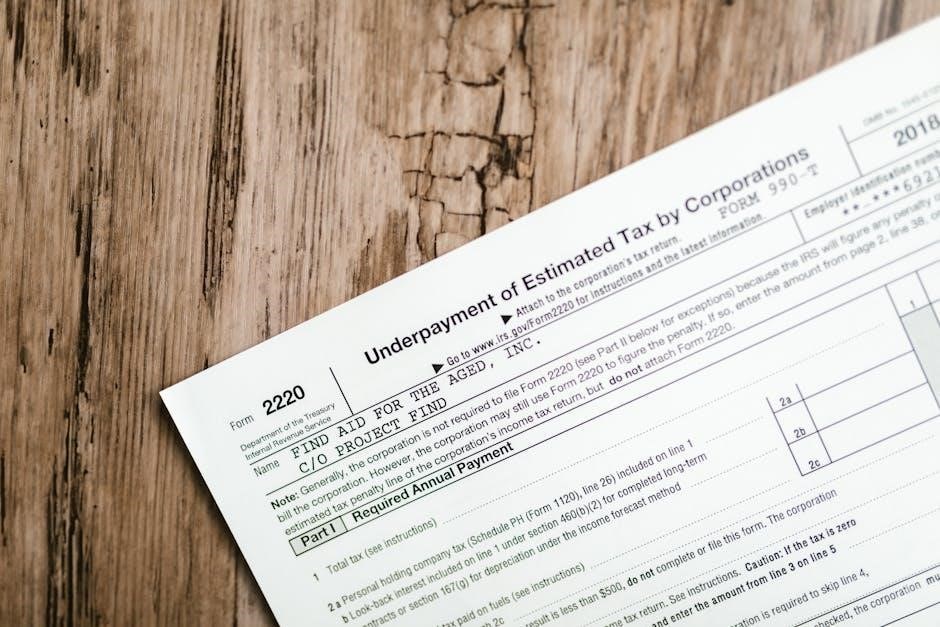
The 2024 Quick Tax Reference Guide provides a concise overview of these adjustments‚ helping taxpayers identify eligible deductions. Utilizing these can significantly reduce taxable income‚ leading to substantial tax savings.
Self-Employment Taxes (2024)
If you work for yourself‚ you’re responsible for self-employment taxes‚ which cover both Social Security and Medicare. Unlike employees who split these taxes with their employers‚ self-employed individuals pay both portions – approximately 15.3% on the first $168‚600 of net earnings for 2024 (Social Security portion). Medicare has no wage limit.
The 2024 Tax Guide Edition highlights the importance of accurately calculating self-employment tax using Schedule SE (Form 1040). You can deduct one-half of your self-employment tax from your gross income as an above-the-line deduction‚ reducing your AGI.
Keeping meticulous records of income and expenses is crucial for determining your net profit or loss. Resources like the downloadable two-page guide offer current rates and assist in proper calculation‚ ensuring compliance and maximizing potential deductions.
Capital Gains Taxes (2024)

Capital gains taxes apply to profits from the sale of assets like stocks‚ bonds‚ and real estate. The tax rate you pay depends on how long you held the asset – short-term (one year or less) gains are taxed as ordinary income‚ while long-term gains (over one year) generally have lower rates.
The 2024 Quick Tax Reference Guide summarizes these rates‚ which are typically 0%‚ 15%‚ or 20% for most taxpayers‚ depending on their taxable income. Understanding these distinctions is key to minimizing your tax liability. The 2024 Tax Guide Edition can further clarify these rules.
Accurate record-keeping of purchase prices and sale dates is essential for calculating capital gains correctly. Downloadable guides provide handy references for current capital gains rates and assist in determining the appropriate tax treatment for your investments.
Tax Forms You’ll Need (2024)
Filing your 2024 taxes requires the correct forms‚ with Form 1040 being the cornerstone for most individual filers. This form reports your income‚ deductions‚ and credits‚ ultimately determining your tax refund or liability. The 2024 Tax Guide Edition provides detailed instructions on completing this crucial document.
Depending on your income sources‚ you may also need Schedule 1 to report additional income and adjustments to income. Other schedules‚ like Schedule D for capital gains‚ might be necessary based on your financial situation. Resources like the downloadable two-page guide offer a quick reference for these forms.
Staying organized with these forms is vital for a smooth filing process. Utilizing worksheets and guides can help ensure accuracy and maximize potential deductions and credits. Remember to consult official IRS instructions for the most up-to-date information.
Form 1040: U.S. Individual Income Tax Return
Form 1040 is the fundamental document for reporting your income tax to the U.S. government each year. It’s where you consolidate all income sources – wages‚ salaries‚ interest‚ dividends‚ and more – to calculate your total taxable income. The 2024 Tax Guide Edition emphasizes the importance of accurate reporting on this form.
The form also details deductions and credits you’re eligible for‚ which directly reduce your tax liability. Understanding these provisions is key to minimizing your tax burden. Resources like the downloadable tax guides provide step-by-step instructions for navigating Form 1040’s various sections.
Carefully reviewing your income and expenses before completing Form 1040 is crucial. Utilizing available worksheets and referencing the official IRS instructions will help ensure accuracy and compliance‚ leading to a smoother tax filing experience.
Schedule 1: Additional Income and Adjustments to Income
Schedule 1 accompanies Form 1040 and is used to report income that isn’t typically included on your W-2‚ such as income from self-employment‚ unemployment compensation‚ or taxable interest. The 2024 Tax Guide Edition highlights its role in providing a comprehensive income picture.
Crucially‚ Schedule 1 also details “adjustments to income‚” often referred to as “above-the-line” deductions. These reduce your adjusted gross income (AGI)‚ potentially lowering your overall tax liability. Examples include contributions to traditional IRAs‚ student loan interest payments‚ and health savings account (HSA) deductions.
Accurately completing Schedule 1 is vital for claiming all eligible deductions and ensuring correct tax calculations. Downloadable guides and reference materials offer detailed instructions and worksheets to simplify this process‚ helping taxpayers maximize their savings and avoid potential errors.
Tax Extensions: Filing for More Time
Life happens‚ and sometimes gathering all your tax documents by the April deadline feels impossible. Fortunately‚ the IRS offers an automatic tax extension‚ providing additional time to file your return. However‚ it’s crucial to understand what an extension does and doesn’t do.
An extension to file is not an extension to pay. You must estimate your tax liability and pay any taxes owed by the original deadline to avoid penalties and interest. The 2024 Tax Guide Edition emphasizes this critical point.

Filing for an extension is relatively simple‚ often done electronically through IRS Free File or by submitting Form 4852. Downloadable guides and resources provide step-by-step instructions. Remember‚ an extension gives you more time to file‚ not to pay‚ so plan accordingly to avoid financial repercussions.

Organizing Your Tax Documents
A well-organized approach to tax document collection is paramount for a smooth filing experience. The 2024 Tax Guide Edition and downloadable resources highlight the importance of preparation. Start gathering documents early – don’t wait until the last minute!
Essential documents include W-2s from employers‚ 1099s reporting various income sources (interest‚ dividends‚ self-employment)‚ and records of deductible expenses. Keep these documents in a secure‚ designated location – a physical folder or a digital system works well.
Consider creating checklists to ensure you haven’t overlooked anything. The two-page tax reduction guide can serve as a handy reference. Proper organization not only simplifies filing but also minimizes errors and maximizes potential deductions‚ ultimately saving you time and money.
Resources for Tax Help (2024)
Navigating the complexities of the 2024 tax landscape doesn’t have to be a solo endeavor. Numerous resources are available to assist taxpayers‚ from comprehensive guides like the 2024 Tax Guide Edition to readily downloadable references.

The 2024 Tax Guide offers detailed explanations of deductions‚ credits‚ and tax law changes. Quick reference guides‚ such as the TIAA 2024 guide‚ provide concise summaries of key tax information. These resources are current as of December 31‚ 2023.
For further assistance‚ explore official government websites and consider utilizing tax preparation software. Remember‚ staying informed and seeking help when needed can significantly simplify the process and ensure accurate filing. Don’t hesitate to leverage available tools and expertise!
State Taxes: An Overview
Beyond federal obligations‚ most individuals also face state income taxes‚ which vary significantly across the 50 states. The 2024 Tax Guide Edition acknowledges the importance of understanding these state-specific regulations‚ as they can substantially impact your overall tax liability.
State tax systems differ in terms of rates‚ deductions‚ and credits. Some states offer standard deductions similar to the federal level‚ while others have unique provisions. It’s crucial to consult your state’s Department of Revenue website for detailed information.

Additionally‚ many states levy sales taxes on purchases‚ and property taxes on real estate holdings. Understanding these various state tax components is essential for comprehensive financial planning. Resources like downloadable guides can offer a starting point‚ but always verify information with official state sources.